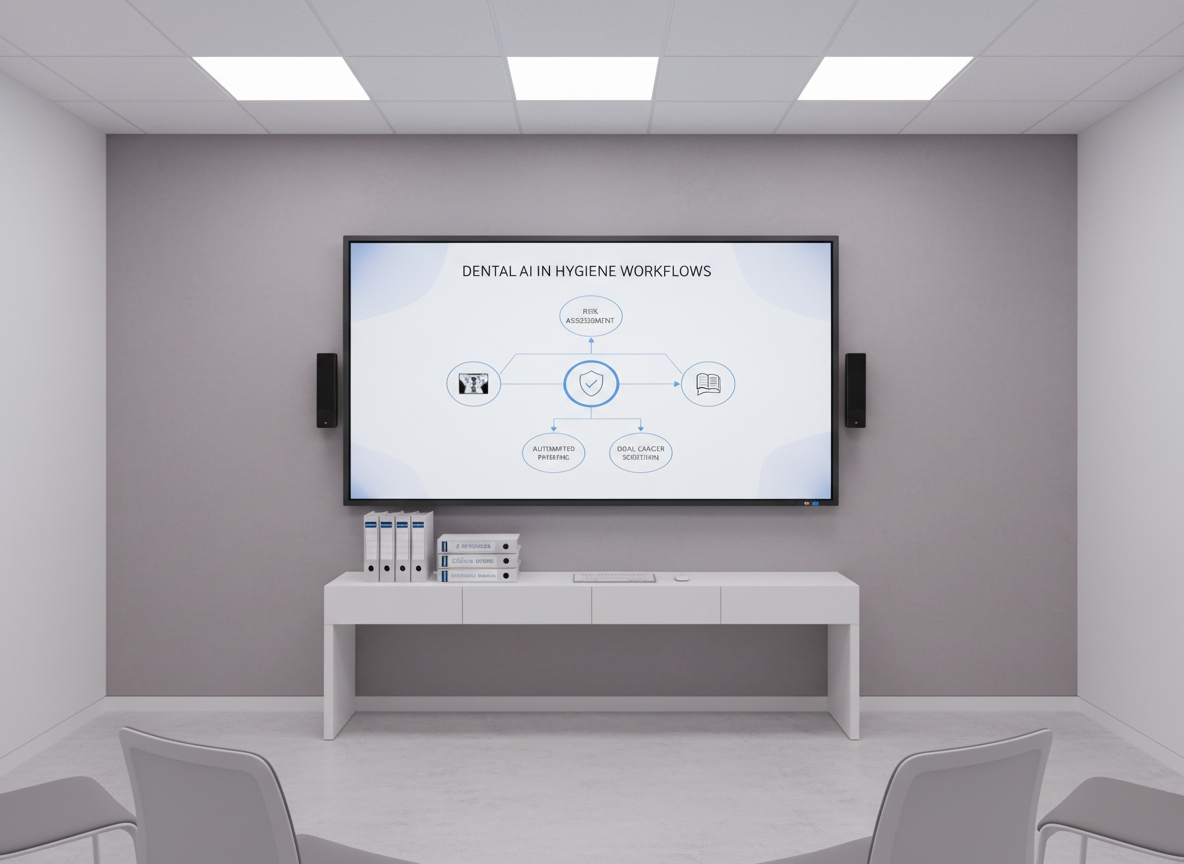
A serene training room setting with a large interactive digital whiteboard dominating the center, displaying a structured flowchart of dental AI in hygiene workflows, including icons for radiographs, risk assessment, and patient education. The whiteboard sits against a soft gray wall with a subtle texture, and a streamlined white console below holds an array of neatly stacked reference binders and a sleek wireless keyboard. Overhead, diffused panel lighting creates an even, shadow-free illumination that feels bright but not harsh. The photographic composition is slightly wide-angle, capturing the full training station with clean lines and negative space, conveying clarity, professionalism, and a forward-thinking approach to educating hygienists about AI in a calm, modern environment.

AI Casebook

Dive into detailed stories of dental AI projects, written through a practical, chairside clinical lens.
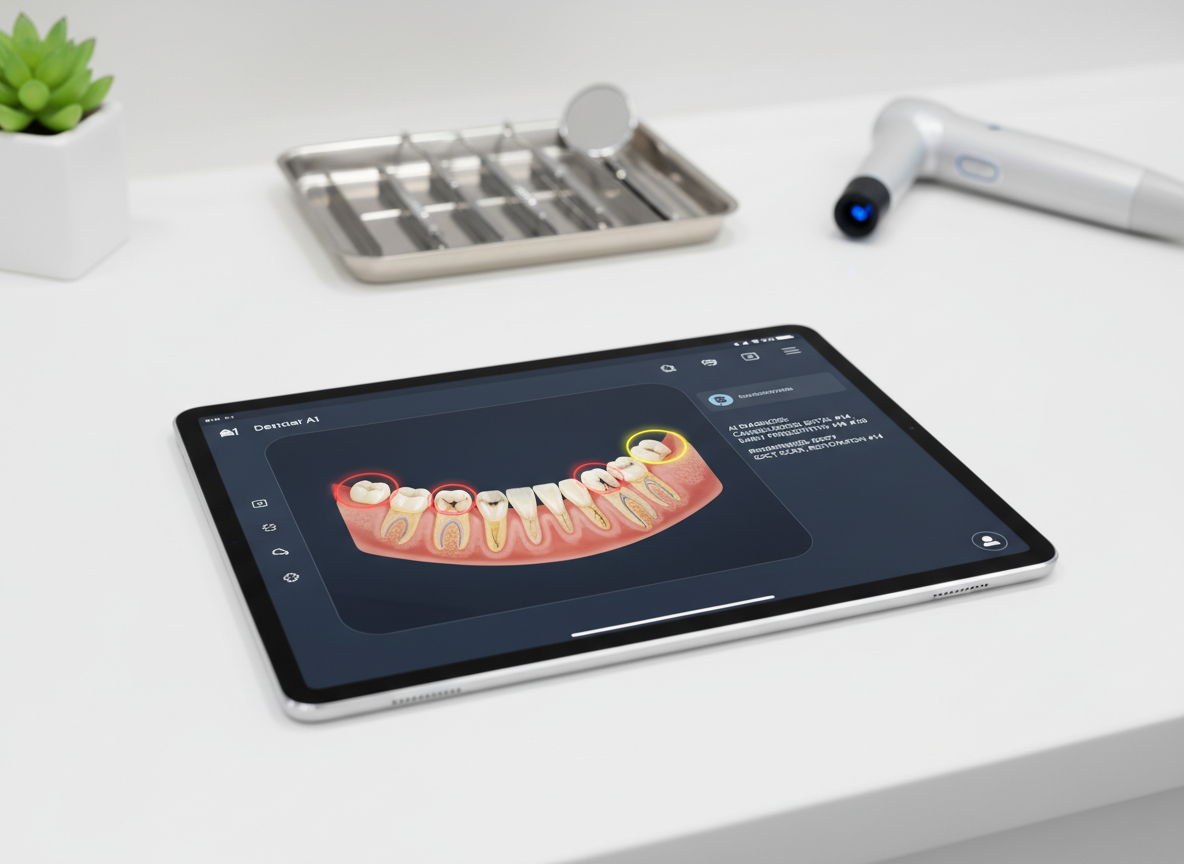
A close-up, photographic view of a modern dental AI interface displayed on an ultra-thin, matte-finished tablet resting on a spotless white countertop. The screen shows a full-mouth digital chart with each tooth rendered in high detail, highlighted zones of concern, and concise AI-generated notes in crisp typography. In the background, slightly out of focus, sit neatly organized dental tools, a digital intraoral scanner, and a small potted plant adding a hint of green. Soft studio lighting from the left creates gentle highlights on the tablet edge and subtle shadows on the counter, giving a clean, modern, and trustworthy atmosphere. The composition follows the rule of thirds, emphasizing the tablet as the intelligent hub of clinical decision support.
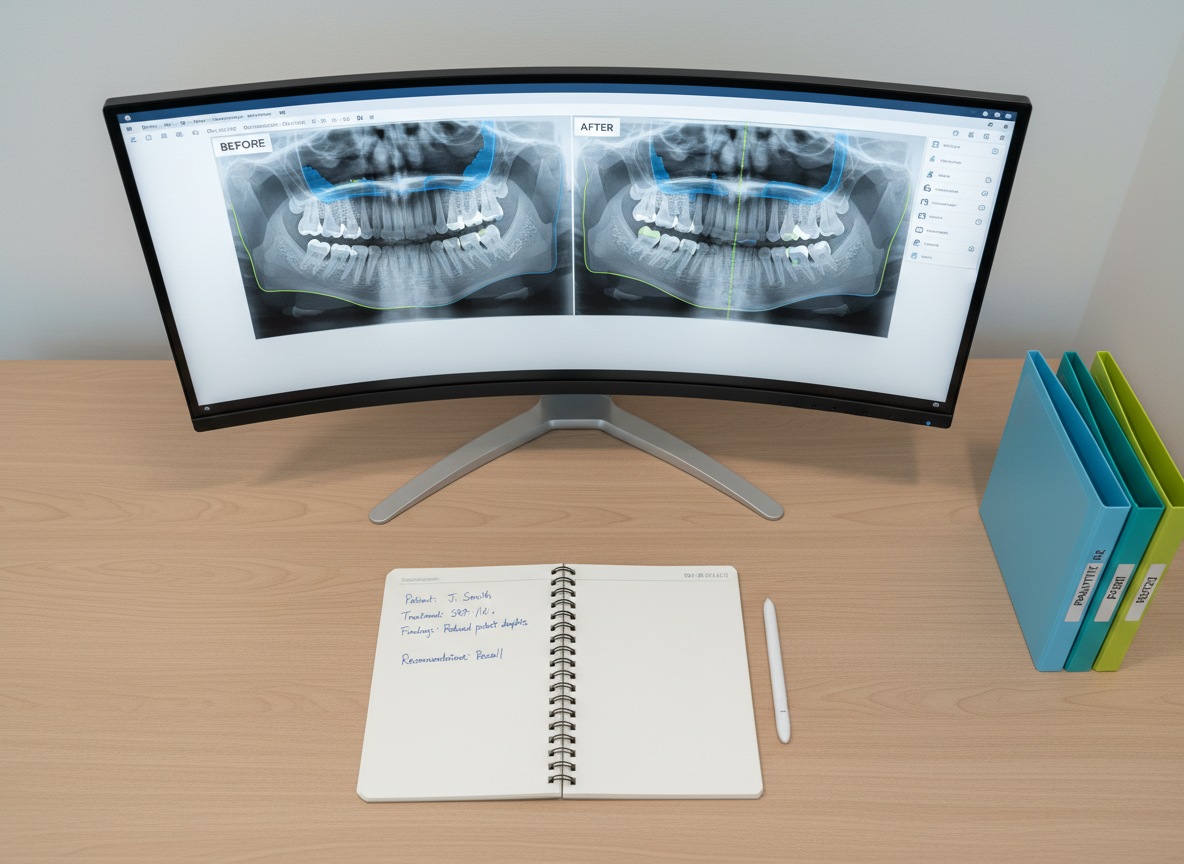
An overhead, photographic shot of a tidy dental hygiene consultation station featuring a large, curved monitor on a light maple desk, displaying side-by-side before-and-after dental x-rays with AI-segmented areas outlined in soft blues and greens. Next to the monitor lies an open notebook with precise handwritten treatment notes beside a wireless pen, and a small stack of color-coded folders labeled for preventive care, perio, and recall. Cool, even LED lighting illuminates the scene, creating minimal shadows and a balanced, analytical feel. The mood is calm, organized, and evidence-driven, with sharp focus across the entire frame to highlight the integration of traditional documentation with advanced dental AI insights in a professional, minimal aesthetic.
A serene training room setting with a large interactive digital whiteboard dominating the center, displaying a structured flowchart of dental AI in hygiene workflows, including icons for radiographs, risk assessment, and patient education. The whiteboard sits against a soft gray wall with a subtle texture, and a streamlined white console below holds an array of neatly stacked reference binders and a sleek wireless keyboard. Overhead, diffused panel lighting creates an even, shadow-free illumination that feels bright but not harsh. The photographic composition is slightly wide-angle, capturing the full training station with clean lines and negative space, conveying clarity, professionalism, and a forward-thinking approach to educating hygienists about AI in a calm, modern environment.
A close-up, photographic view of a modern dental AI interface displayed on an ultra-thin, matte-finished tablet resting on a spotless white countertop. The screen shows a full-mouth digital chart with each tooth rendered in high detail, highlighted zones of concern, and concise AI-generated notes in crisp typography. In the background, slightly out of focus, sit neatly organized dental tools, a digital intraoral scanner, and a small potted plant adding a hint of green. Soft studio lighting from the left creates gentle highlights on the tablet edge and subtle shadows on the counter, giving a clean, modern, and trustworthy atmosphere. The composition follows the rule of thirds, emphasizing the tablet as the intelligent hub of clinical decision support.

Casebook

Explore real-world dental AI case studies that trace each project from initial clinical challenge to measurable outcomes, highlighting workflow changes, team training, and how Aakriti translates algorithms into everyday wins for hygienists and patients.

Reviews

An overhead, photographic shot of a tidy dental hygiene consultation station featuring a large, curved monitor on a light maple desk, displaying side-by-side before-and-after dental x-rays with AI-segmented areas outlined in soft blues and greens. Next to the monitor lies an open notebook with precise handwritten treatment notes beside a wireless pen, and a small stack of color-coded folders labeled for preventive care, perio, and recall. Cool, even LED lighting illuminates the scene, creating minimal shadows and a balanced, analytical feel. The mood is calm, organized, and evidence-driven, with sharp focus across the entire frame to highlight the integration of traditional documentation with advanced dental AI insights in a professional, minimal aesthetic.

Aya Nakamura

“Dental AI finally made sense when Aakriti trained our hygiene team; adoption was smooth, and our caries detection consistency noticeably improved.”

A serene training room setting with a large interactive digital whiteboard dominating the center, displaying a structured flowchart of dental AI in hygiene workflows, including icons for radiographs, risk assessment, and patient education. The whiteboard sits against a soft gray wall with a subtle texture, and a streamlined white console below holds an array of neatly stacked reference binders and a sleek wireless keyboard. Overhead, diffused panel lighting creates an even, shadow-free illumination that feels bright but not harsh. The photographic composition is slightly wide-angle, capturing the full training station with clean lines and negative space, conveying clarity, professionalism, and a forward-thinking approach to educating hygienists about AI in a calm, modern environment.

Mateo García

“With Aakriti guiding implementation, AI became a supportive second set of eyes—clinical confidence rose, and patients better understood their treatment plans.”